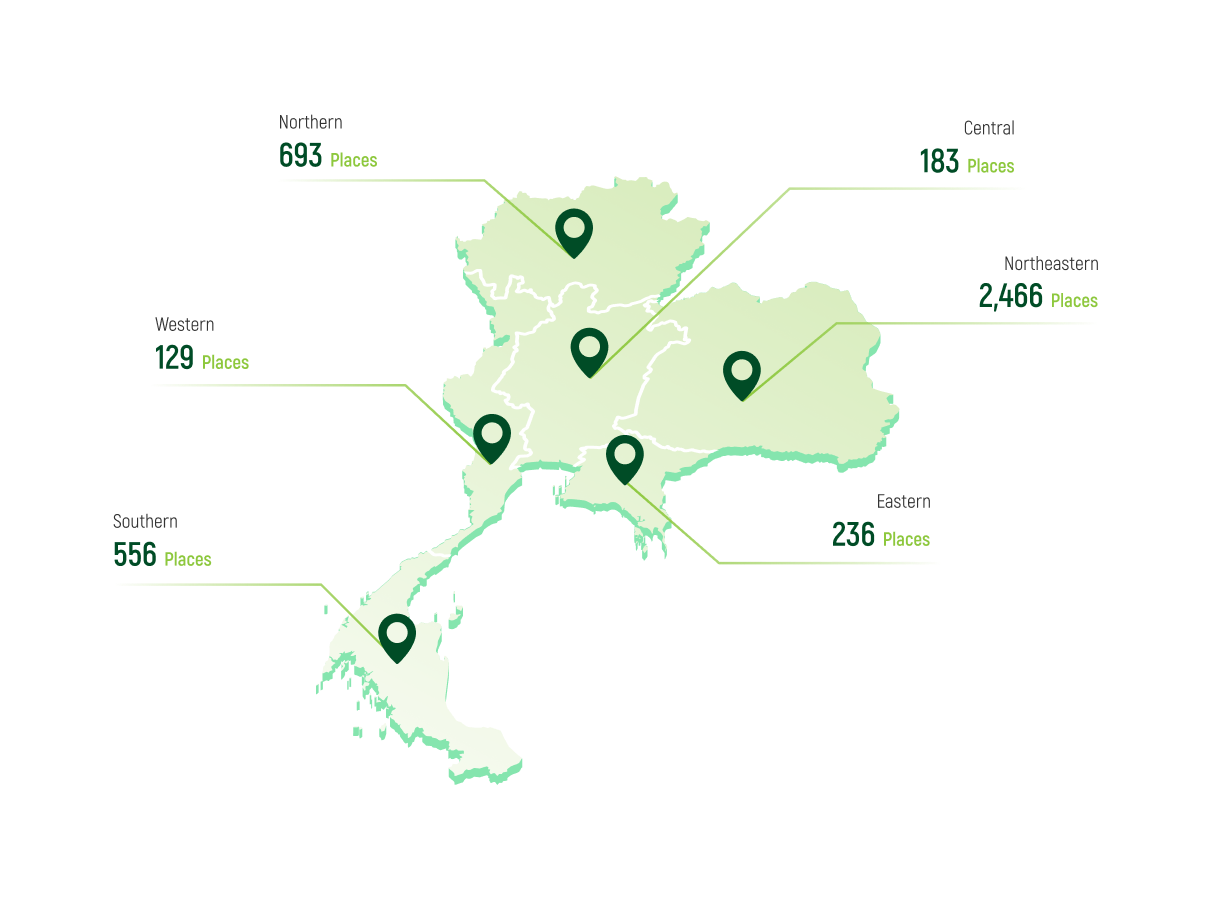
The expansion of AIS’s network into remote and underserved areas, despite higher capital investment and maintenance costs as well as constraints related to accessibility and varying levels of digital literacy among certain user groups, forms a critical foundation for the Company’s long-term growth. These investments enable broader access to digital innovations and support the development of inclusive, user-centric services that respond to diverse societal needs. Expanded network coverage not only increases the customer base and service utilization, but also enhances access to essential services such as education, healthcare, and communication through e-learning, e-health, and tailored digital solutions for all segments of society, particularly vulnerable groups. This approach contributes to greater social equity, improves quality of life, and reinforces AIS’s role as a key digital infrastructure provider supporting Thailand’s sustainable social and economic development.

Management Approach
AIS is committed to enhancing the quality of life of Thai people by leveraging communication technology as a key enabler to reduce inequality and promote digital inclusion. By utilizing its telecommunications infrastructure, human capital, and strategic partnerships. AIS implements its initiatives through three strategic pillars as follows:

Expansion of telecommunications networks through new technologies to ensure broad coverage across populated areas

AIS develops high-quality telecommunications networks with nationwide coverage across both urban and remote areas. The Company continuously invests in new technologies to support diverse usage needs, enhance quality of life, and stimulate economic growth, while working closely with local communities.


Supporting public access to services and affordable digital communication devices

AIS is committed to promoting equitable access to a wide range of digital communication services and devices at affordable prices for all segments of society, particularly students, youth, and migrant workers. These efforts aim to expand internet access and strengthen digital learning opportunities across all regions.

Developing digital platforms that promote inclusive access to technology and enhance quality of life

AIS leverages communication technologies to develop digital innovations and platforms that broaden access to education, skills development, and income-generating opportunities. These initiatives help reduce inequality and support the sustainable growth of Thai society.
 

2025 Performance

Green Energy Green Network for THAIs
AIS, in cooperation with Gulf Energy Development Public Company (Gulf) and the Highland Research and Development Institute, has implemented a project to reduce social inequality and improve the quality of life for people in remote areas. The initiative focused on building a telecom network powered by solar energy, covering 8 communities across 5 provinces and benefiting a total population of 6,339 people. The project also assessed social returns (Social Value) across economic, social, and environmental aspects, such as enhancing access to clean energy and communication networks, reducing travel time, and developing strategies for future expansion to other areas.
Digital Library
AIS has continued its collaboration with the Ministry of Social Development and Human Security for the 5th consecutive year to promote technology-enabled learning and expand access to e-learning and e-books for students and vulnerable groups through the ReadDi platform. In 2025, the collaboration was expanded to welfare institutions under the Ministry, enabling 7,585 students and personnel across 77 locations to access digital learning resources.
Educators & Tutors Thailand
AIS implements digital skills development and provides teaching materials for Thai educators through The Educators Thailand program, and collaborates with school teachers and private tutors under The Tutors Thailand initiative. Together, these programs offer a total of 391 courses covering areas such as finance, business management, and technology. The initiatives expand access to knowledge, reduce educational inequality, and strengthen the capabilities of both educators and learners. In 2025, more than 439 individuals enrolled on the education platforms.
Broadband Internet for Schools
AIS implements this initiative to promote inclusive access to education by providing free broadband internet installation and services to schools and communities in remote areas. The program supports access to online educational resources, strengthens the digital skills of teachers and students, and enables communities to access government services and vocational skills development opportunities. Since 2011, the initiative has been implemented across more than 4,263 locations, reaching a total of 753,468 beneficiaries.
Related Documents
Information concerning “Social Inclusion” can be found in the 2025 Sustainability Report.